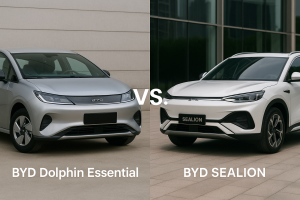
BYD Novated Lease 4% fleet discount
EV Charging Rates Explained
Level 1 chargers are ones that connect to a standard 240V wall socket, meaning you can charge up your vehicle practically anywhere with a wall plug. These are the slowest level of chargers, giving you roughly 10km of range per hour. Level 2 chargers are the next fastest. Included in Level 2 are dedicated home charging stations (hardwired chargers) and public AC charging stations.
Level 3 chargers include DC fast chargers and are the fastest way to juice up your EV.
Do You Need A Dedicated Home Charging Station For Your EV?
Dedicated home charging stations are something that many EV owners opt for. They generally have higher amperage and can juice up your car at a quicker rate than plug-in chargers. But if you’re not down for the electrician’s fees and higher price of the unit itself, the good news is: you don’t actually have to install a hard-wired charging station. Plug-in, portable chargers offer an alternative to hard-wired charging stations.
What Government Assistance is Available for Purchasing an EV?
Australia-wide, you can now buy/drive an electric vehicle without paying import tariffs or fringe benefits tax (FBT).
New South Wales are offering a $3000 rebate for the first 25,000 new battery electric and hydrogen fuel cell vehicles with a dutiable value of less than $68,750.
Victoria is also offering a $3000 rebate for zero emission vehicles (ZEVs) with a dutiable value of less than $68,750.
When Will Labor’s EV Tax Break Come Into Effect?
Labor’s EV tax break is actually already in effect. The Electric Car Discount came into effect at the start of the new financial year on July 1, 2022. The Discount is guaranteed to go ahead for three years when it will be reviewed, in view of EV uptake.